This website uses cookies. By continuing to use this website you consent to the use of cookies. Read the Privacy Policy.


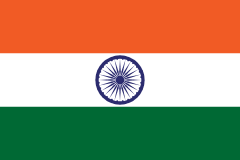
A Brief History of India
- India is home to one of the oldest civilisations in the world. Early hominid presence dates back about two million years, with modern humans arriving between 73,000 and 55,000 BC, and early agricultural settlements emerging around 7,000 BC.
- From 2,600 to 1,900 BC, the Indus Valley Civilisation flourished along the Indus River system with major cities like Harappa and Mohenjo-Daro, known for complex urban planning, brick architecture, and sanitation systems.
- Between 1,500 and 500 BC, Indo-Aryan peoples migrated into the region, introducing Sanskrit and the early Vedic texts, and laying the foundation for Hinduism and the early caste system.
- During the fifth century BC, Siddhartha Gautama and Mahavira founded Buddhism and Jainism respectively, challenging traditional ritual hierarchies.
- The Mauryan Empire, founded by Chandragupta Maurya and expanded dramatically by Emperor Ashoka the Great, unified a large portion of the Indian subcontinent between 322 and 185 BC,
- The Gupta Empire brought about a peak period for science, engineering, art, literature, and mathematics from the fourth to the sixth centuries AD, including major contributions such as the concept of zero and the decimal system.
- Following the arrival of Islam via trade and conquests, the Delhi Sultanate was established in 1206, ruling alongside powerful southern Hindu empires like the Cholas and the Vijayanagara Empire through the fifteenth century CE.
- The Mughal Empire united much of the subcontinent, reached a height of artistic and architectural splendour, and became a major global economic power between 1526 and 1857.


- The Netherlands, England, France, and Denmark-Norway all established trading posts in India in the early seventeenth century. As the Mughal Empire disintegrated, in the early eighteenth century, many relatively weak and unstable Indian states which emerged were increasingly open to manipulation by the Europeans, through dependent Indian rulers.
- In the later eighteenth century, Great Britain and France struggled for dominance over India, partly through proxy Indian rulers, but also by direct military intervention. The defeat of the formidable Indian ruler Tipu Sultan in 1799 marginalised the French influence. This was followed by a rapid expansion of British power, through the greater part of the Indian subcontinent, in the early nineteenth century.
- The British East India Company gradually expanded its control of India following the Battle of Plassey in 1757, which shifted to British Crown rule after the Indian Rebellion of 1857. British India, consisting of the directly-ruled British presidencies and provinces, contained the most populous and valuable parts of the British Empire. So, it soon became known as "The Jewel in the British Crown". Russia's aspirations to win this prize led to continued conflict in Afghanistan and a set of political manoeuvres known as The Great Game.
- Mass civil disobedience and nationalist campaigns grew sharply during the early to mid-twentieth century, led by figures like Mahatma Gandhi and the Indian National Congress.
- In 1947, India gained its independence and was partitioned into the Dominion of India and the Dominion of Pakistan. Pakistan, oddly separated into two parts by 1,000 miles of northern India initially, was created as a homeland for colonial India's Muslims. After a bloody war, East Pakistan became Bangladesh and West Pakistan just Pakistan.
- Tensions between India and Pakistan continued. The main point of conflict is Kashmir, which both sides claim, even though Kashmir itself would prefer to be independent. It has instead been subjected to a line (Asia's Berlin Wall) drawn through it and constant incursions on both sides. Both Pakistan and India are focused again on border issues and access. India would be happy to weaken Pakistani links with China, if it could close that small but important border. Meanwhile, they have more than 2,000 miles of shared border, over which to maintain hostilities.
- India adopted its constitution in 1950 to become a sovereign democratic republic, eventually growing into a major global economy and nuclear power following significant economic reforms in 1991.


Is India a Safe Place to Visit?
As far as government advice is concerned India is generally a safe and deeply rewarding destination for travellers, but depending on your travel experience, it can bring high levels of culture shock. This is a vibrant, often very crowded, high-energy environment. Major tourist areas, heritage sites, and hotels maintain good security, and hospitality is deeply rooted in the local culture. However, experiences can vary depending on the region (and India is huge).
Navigating public spaces full of people who don't seem inclined to give way (each to his own) and avoiding persistent street vendors can become tiresome. There are opportunistic scams or pickpocketing in busy hubs - petty theft is said to be the most common issue, although so far, I've never encountered theft in India. Solo travellers, particularly women, are advised to avoid poorly lit or isolated areas at night, dress conservatively to respect local customs, and rely on pre-booked transport options like registered taxis or ride-hailing apps.
Road traffic accidents are the biggest concern in India. Traffic rules are often ignored (especially lights, roads can be poorly maintained or unlit, and a diverse mix of pedestrians, animals, and varied vehicles packed to the roof (and sometimes on it) frequently share the same space. There are more road deaths in India than any other country in the world. Officially, about 115,000 people die on Indian roads each year - though a recent British Medical Journal study suggests that the true number of fatalities is closer to 200,000.
I wouldn't drive myself in India - and hiring a car with a driver is relatively cheap. There's also Uber and other similar iterations.

Is India a Poor Country?
From being a comparatively poor country at Independence in 1947, India has become a fast-growing major economy. It's a hub for worldwide information technology services, and plenty of call centres. Labour is cheap.India has a space programme which includes several planned or completed extra-terrestrial missions and is a nuclear weapons state, ranking high in military expenditure. It has ongoing and long term disputes over Kashmir with its neighbours, Pakistan and China.
Indian movies, music, and spiritual teachings play an increasing role in global culture. India has therefore substantially reduced its rate of poverty. However, it still faces the challenges of gender inequality, child malnutrition, and rising levels of air pollution. The extreme poverty rate in India is now down to 3%. but that is still nearly 50 million people.
How Expensive is India?
India is, on the whole, a budget-friendly destination, with extremely affordable basic guesthouses, local street food, and transport, especially on the extensive train network. Even the luxury sector, with world-class converted palace hotels and premium resorts is reasonably priced, though as always, costs can mount rapidly. Foreigners often pay higher tier admission rates at major monuments.


India - Facts and Factoids
- India is now the country with the largest population in the world (over 1.4 billion).
- India is the world’s largest democracy.
- India has three of the largest cities in the world: Delhi, Mumbai (Bombay) and Kolkata (Calcutta). According to the UN, Delhi is now the second-largest urban agglomeration in the world, with over 22.65 million people; it is only surpassed by Tokyo. Mumbai is ranked seventh and Calcutta tenth.
- India has more linguistic diversity than any other large country. There are over 1,000 languages, but many overlap and are hard to define. Official languages are Hindi and English.
- India has the second (or third) highest population of Muslims in the world. Even though fewer than 15% of Indians are Muslim, the country's enormous population means that it outranks all Muslim-majority countries, except Indonesia and possibly Pakistan. (There are almost exactly the same numbers of Muslims in Pakistan as in India).
- The majority religion in India is Hinduism (79%). Minority religions include Christianity (2.3%), Sikhism, (1.7% ) Buddhism (0.7% ) and Jainism (0.4% ).
- India was once an island. It broke off from an ancient supercontinent referred to as Gondwanaland by paleogeographers (named after Gondwana, a forested area of central India). Then it moved slowly northwards, from modern-day Madagascar, to join Asia.
- Bollywood, the film industry of Mumbai, produces about 200 films a year. However, more than 1,100 movies are produced, on average, each year overall in India - that's slightly ahead of Nigeria, twice as many as the American film industry and ten times as many as Britain produces.
- India was referred to as Golden Bird, in ancient times, when the country was known for its wealth and prosperity.


India - Essential Travel Info
| Border and Entry Control | Visa Regimes | Most travellers require a visa before arrival, typically obtained through the (cumbersome) official online e-Visa system. Citizens with an Overseas Citizen of India card are exempt. |
| | Passport Regulations | Passports must be machine-readable, have at least two blank pages, and remain valid for at least 180 days from the date of entry. |
| Finance | Accepted Currencies | The sole legal tender is the Indian Rupee (INR), which cannot be obtained outside India or taken out of the country. Bringing foreign currency is allowed, but it must be exchanged at authorised banks or money changers. |
| | Payment Ecosystem | Digital payments via mobile apps and cards are widespread in major cities, but cash remains absolutely essential for street vendors, small shops, and rural areas. |
| | Banking and ATMs | Automated teller machines are widely accessible across towns and cities, though international cards work best at major bank terminals. |
| | Tipping Culture | Tipping is common and appreciated in the tourism and hospitality sectors. A tip of 5% to 10% is customary at casual and fine-dining restaurants if a service charge is not already included. |
| Electrical and Technical | Plug and Socket Types | Sockets predominantly accommodate round three-pin plugs (Types D and M), alongside the standard European two-pin plug (Type C). |
| | Voltage and Frequency | The standard domestic electricity supply operates at 230 volts with a frequency of 50 hertz. |
| | Internet and Connectivity | Wi-Fi is standard in hotels and modern cafes. High-speed 4G and 5G networks are extensive, and visitors can easily purchase a local prepaid SIM card at international airports using their passport. |
| Health | Water Potability | Tap water is definitely not potable for international visitors. |
| | Emergency Contacts | The national unified emergency number across India is 112. This connects callers to police, fire services, and ambulance assistance. |
| | Vaccinations | Recommended routine boosters include tetanus, diphtheria, polio, hepatitis A, and typhoid. A yellow fever certificate is legally required if arriving from an infected region. |
| Communication | Language | Hindi and English serve as the official languages of the central government. English is spoken fluently across the tourism, business, and hospitality sectors. |
| Best Time of Year to Travel | Weather Patterns | October to March is generally the best time for most of the country, avoiding the intense heat of April to May. The country experiences two monsoons. The southwest monsoon (June to September) brings heavy, widespread rainfall across most regions, making travel then challenging. The northeast monsoon (October to December) brings heavy rain to the southeast coast, particularly Tamil Nadu, so the best time for that region is January to March. However,, the high-altitude Himalayas and parts of the north are best visited from June to September. |


What to See and Do in India?
I have a love-hate relationship with India. It is an endlessly fascinating assault on the senses: colourful, vibrant, and wonderfully spiritual. The festivals are joyful and amazing, the landscapes, temples and architecture are astonishing.
The crowds and disregard for personal space are wearing, the poverty is difficult to deal with (though numbers of people living on the streets appear to have diminished dramatically over recent years). The treatment of women as second-class citizens is still a huge challenge in many places.
I have visited ten times and have still only seen a small part of India’s incredible diversity.
- A train journey is a must - Across the Middle, taking in Delhi, Kolkata, Shimla and Amritsar, amongst a host of absorbing architectural sights. Varanasi was the highlight for me. A never-to-be forgotten, enthralling and ethereal experience.
- Magical Mumbai and the Gateway to India
- Tranquil Kashmir – though check safety advice – tensions are often too high to make it safe
- Kerala - The land of lagoons and Ayurveda
- Goa – Where it Rocks, though Bohemia is rapidly being replaced by rows of beach beds carrying Russians sporting budgie smugglers
- Tiger Safaris
- And the isolated paradise of the Andaman Islands – Beware the Jarawa and the Salties
Thiruvananthapuram
I was going to spend Easter at home writing, but then I read an article in a Sunday supplement and settled instead for a fortnight having Ayurvedic treatment. So, here I am in Kerala, a state in the far south of India. It's known for beaches, palm trees and its mountains - the Western Ghats. The capital, where I've landed, is Thiruvananthapuram, thankfully often shortened to Trivandrum. It's almost right on the southern tip of India. Gandhi nicknamed it 'The Evergreen City of India', but it's apparently also known as 'God's Own Capital'.
The Sree Padmanabhaswamy Temple here is impressively known as the world's richest temple. Treasure was stored here secretly, until a Supreme Court order, in 2011, allowed an inspection committee to open several of the six subterranean chambers (kallaras) beneath the temple. They uncovered massive stores of gold idols, crowns, diamonds, rubies, emeralds, and sacks of ancient Roman and Napoleonic gold coins. The raw bullion and gem value of the items inventoried so far is 'conservatively' estimated at $17 billion to $22 billion. And they haven't yet opened Vault B, which is deemed to be sacred.
The temple, inside the historic East Fort area, is dedicated to Lord Vishnu and gave the city of Thiruvananthapuram its name (The City of Lord Ananta). It's not an obvious connection to foreigners, but Padmanabha and Ananta are both alternative names for Vishnu. (The Vishnu Sahasranama is an ancient hymn actually listing 1,000 titles that each highlight a different facet of this supreme deity.)


Outside the temple's eastern entrance, huge wooden and cloth effigies of the Pancha Pandavas - the five brothers from the Mahabharata (one of the two major Sanskrit epics of ancient India revered in Hinduism, alongside the Ramayana) - line the street. They were erected for the ten-day Painkuni Festival, held every March or April, at the Sree Padmanabhaswamy Temple. Standing several storeys high, the figures are meant to watch over the proceedings and ward off drought. But they're now being wheeled away, as another festival, Vishu has taken over.
Vishu is a holiday, which, according to the local blurb, ‘is celebrated with much fanfare and energy’. Vishu is Kerala’s vibrant New Year and spring harvest festival, celebrated every April with fireworks, feasts and colourful temple processions. On the move too are statues of gods (specifically the goddess Durga and her assistants).


Right next door to the temple is the Kuthiramalika Palace Museum (or Puthen Malika), a traditional wooden palace built in the 1840s by Maharajah Swathi Thirunal. The name translates to 'Mansion of Horses', after the 122 carved wooden horse heads lining the roof brackets outside. It’s all dark teakwood, rosewood and granite, and inside it's packed with the Travancore royal family's antiques, Belgian mirrors and musical instruments - a nod to the Maharajah himself, who was apparently quite the poet and classical composer in his spare time.
Also, close by, the Kerala Legislative Assembly Building (or Niyamasabha Mandiram). It’s a huge, striking complex, from the late nineties, which blends classical temple-style pillars with traditional sloping tiled roofs - though I suspect it's slightly less peaceful inside than the palace.
Kovalam, Kerala

Just south of Trivandrum, Kovalam is a string of three crescent beaches separated by rocky headlands. Originally a quiet fishing village, it was put on the map by hippies, in the 1970s, and has been a staple on the Kerala tourist trail ever since.
The best-known stretch is Lighthouse Beach, named after the red-and-white striped Vizhinjam Lighthouse perched on the southern promontory, which looks out over the Arabian Sea and a busy line of beachfront cafés. It's classic postcard bent palm trees with fine white sand and a line of wooden dhows marching into the sea. The beach is packed. It's a favourite meeting place for the locals, as well as being a home for the fishing boats.
Thekkady


First, a mini tour of the area, starting with Thekkady, high up in the Cardamom Hills of the Western Ghats. Thekkady means teak and this is very much a tourist town. It is advertised as being home to herds of elephants, sambar deer, tigers, gaur, lion-tailed macaques and Nilgiri langurs. But it is also famous for its thick forests. So, in fact, sightings of elephants and especially tigers are highly unlikely. Tea plantations, myriad fantastic green patterns weaving up the slopes. Spices grown locally, in gardens open to the public (black pepper, cardamom, cloves, and cinnamon, along with vanilla and nutmeg) and included on every tour.
Periyar ‘Tiger Safari’ Park


A boat cruise in the Periyar ‘Tiger Safari’ Park, where I'm told, there is more chance of seeing elephant. And deer and bison coming down to drink. But, as Lonely Planet says, ‘it doesn’t scream wildlife experience’. It’s an artificial lake, made by the British constructing a dam on the river, and the boat is crammed with noisy Indian tourists. Unsurprisingly, we fail to spot any tigers (except for cardboard cut-outs), but we do encounter a small herd of elephant, sauntering down to the water. All the passengers scream and run to the rail, on one side, to see them. For a few moments I fear my time is up, as the boat tilts. The elephants lumber off, of course.
Afterwards, tea and banana fritters on the lawn of my hotel.
On the Road in Kerala
I am being driven around by a dishy, but very naive, six-foot 29-year-old who spends the whole journey telling me that he would like to fall in love with an English lady. He drives like a maniac, as does everyone. Only the cows use the zebra crossings. There's plenty to see in Kerala. Mountains covered in lush vegetation, huge flat valleys, abundant flowers. Hindu temples and an ornate Roman Catholic Church with a huge dome to report. Ox carts rolling by.


Coconut Lagoon, Kerala
Now I’m staying on an island resort on the edge of a lake. It’s only accessible by small speedboat. This is what the website says: 'History in Liquid Reflections. There are so many facets to the Coconut Lagoon experience. The heritage of the old feudal villages of Malabar. The vast frolic of the Vembanad Lake. The shimmering waters of the canals that criss-cross the property. The flavour bursts of Kerala home-style cooking'.
Coconut Lagoon is located in the Kerala district of Kuttanad, or 'The Land of the Short People'. Someone suggests that this name came about because the folks here are always knee-deep in the paddy fields that form most of the island. (Kuttanad is one of the very few places in the world where farming takes place below sea level - one to three metres down - protected by an intricate network of dykes and bunds.)
I have an 'antique cottage'. It is a section of a traditional wooden Kerala family home (tharavadu), which was dismantled, transported by boat to the island, and reassembled piece by piece.
I get up and have a shower in my open-air bathroom, complete with full-size banana tree, offering ripe hands of fruit. Eat vegetable dosas for breakfast, along with watermelon juice and fresh mangoes. Amble along the labyrinth of little canals and bridges, Venetian style, that make up the island and take a two-hour boat ride through the backwaters, past canoes and flat boats skipping through the channels, all lined with palms and bobbing darters.


Children cavort on the banks playing cricket and letting off loud firecrackers, when we ignore the shouts of ‘Gimme Pen’, the tourist international language. Return, a trifle scorched and clamber into a hammock overlooking the lake. The miniature hump-backed cows that act as lawn mowers are butting the boys who are trying to tether them. These are Vechur cows, the smallest cattle breed in the world - named after the nearby village of Vechur - and under a metre tall.
Eat fresh cashews and pineapple for lunch, with coconut and ginger shake. Read till I am even more scorched and then fall into the swimming pool. Sit and read in the Jacuzzi. Then go for another boat ride, this time to watch the sun go down behind the lake.
Finally, my first Ayurvedic treatment. Massaged and pummelled with oil and herbs by two women at once. Blissful, sublime. Then a curry buffet. The food is brilliant. Best curry so far, the unlikely sounding cashew and pea. Stuffed to the hilt (well the Indians love English clichés and it's catching). I can just about manage to type.
It's a balmy beautiful evening and pipes are lilting across the water.
Cochin, Kerala

Cochin (or Kochi), where I am treated to a converted maharajah’s palace. Polished teak and designer curry. This famous port 'Queen of the Arabian Sea', was an important spice trading centre on the west coast of India from the fourteenth century onward, when a flood fortuitously carved out its harbour. Before the British arrived, Cochin was ruled first by the Portuguese (who built Fort Kochi and where Vasco da Gama was originally buried in 1524) and then the Dutch.
As a result, it's a delightful hotchpotch of tiled colonial bungalows, diverse temples and churches and restored mansions, like the Old Harbour House. And there's the (remains of the) fort. It was demolished by the Dutch and the British.
But the must-see here are the picturesque cantilevered Chinese fishing nets (Cheena Vala), all along the beach. They were introduced by explorers from the court of Kublai Khan in the late fourteenth century and each counterweighted net takes a team of up to six fishermen to haul out of the water.
Ayurveda in Kerala


My Ayurvedic centre, the Somatheeram (the one mentioned in the paper) is located on the tranquil Malabar Coast, back near Kovalam. It is billed as the world's first Ayurvedic resort (founded in 1985).
Though very lovely, this hotel is full of meditating Italians and Germans. I exhaust myself trying to speak German (Ach so you have zee British sense of humour!) The Internet Café has two computers, making it exactly twice as large as the last one, though unfortunately it is not even half as fast.
My treatment proper starts here. I already feel loads more relaxed. I've only one set of bags under my eyes now. I'm put through my paces in the Ayurvedic hospital. Questionnaire and then diagnosis - which mixture of the three doshas vata/pitta/kapha am I? They make me vata/pitta which is fine, as that's what I made myself in the book I read at home. Basically I'm too quick for my own good - no surprise there either. Then they tell me I shouldn't sunbathe or eat spicy food. I'm not entirely obedient on either score. The spicy prawns are much too tasty. And why offer them if I can't have them? That's just sadistic. I’m spending a lot of time in the hammock just outside my room - well it's in partial shade.


The treatments are intended to rejuvenate and purify. The word purgation is rather freely bandied about. Most of it is very wonderful. I'm massaged with herb bundles (elakizhi) and dripping jugs of oil (the masseurs use hands and feet). I'm laid in a trough and have warm oil dripped on my head from a clay pot in a pendulum motion. It’s called shirodhara and it's like being on the edge of the sea - very calming.
Then I have hot oil drizzled over me (as they say on all the best restaurant menus) for half an hour. I know now just how the turkey feels. All this absolutely stark naked. No inhibitions left now. This is all part of what's called panchakarma. If I'd had longer they would have added colonic irrigation (with you guessed it - hot oil) and used leeches on my skin. Of course I'm madly disappointed.


The resort is built all up the hillside and I have a cottage with a view over the bay. The path is lined with exotic flowers and punctuated with picture stops, so it takes half an hour and a pint of water to get up to the restaurant. I fall down the steps one day and cut my legs, so I arrive in the hospital rather earlier than anticipated.
Otherwise, life is quiet but relaxing. Catching up on my reading before I come home. And guess who turns up to visit me on the beach this morning?
Read more about Ayurveda, when I went to Sri Lanka here, and read more about India here.
Newsletter Subscription
Stay in touch. Get travel tips, updates on my latest adventures and posts on out of the way places, straight to your Inbox.
I keep your data private and only share your data with third parties that make this service possible. Privacy Policy. No spam I promise. Unsubscribe any time.