This website uses cookies. By continuing to use this website you consent to the use of cookies. Read the Privacy Policy.


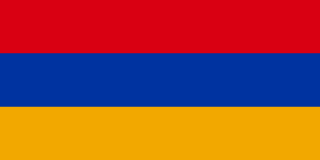
Armenia - A Very Brief History
- Armenia has an ancient cultural heritage - this is one of the oldest countries in the world. The first Armenian state dates back to 860 BC(Urartu), and the sixth century BC (the Satrapy of Armenia). The Kingdom of Armenia reached its height under Tigranes the Great, in the first century BC.
- In the year 301, Armenia became the first state in the world to adopt Christianity as its official religion. It lays claim to the oldest cathedral in the world.
- Over time, the ancient Armenian Christian kingdom was split into western and eastern sections, ruled by various Islamic powers from the seventh century until the early nineteenth century. Most notably, the Ottoman and Persian empires, repeatedly ruled both of the two, at different times.
- By the nineteenth century, Eastern Armenia had been conquered by the Russian Empire, while most of the western parts of the traditional Armenian homeland remained under Ottoman rule.
- According to Wikipedia, 'During World War I, 1.5 million Armenians, living in their ancestral lands, in the Ottoman Empire, were systematically exterminated - the Armenian genocide.'
- Eastern Armenia became the First Republic of Armenia, after the Russian revolution, in 1918, but was then subsumed into the Soviet Union.
- The modern Republic of Armenia became independent in 1991, during the dissolution of the U.S.S.R.


Is Armenia A Safe Place to Travel?
Armenia is generally considered a very safe destination for travellers, with low levels of violent crime and a welcoming, hospitable culture. As in most big cities, there are incidents of pickpocketing and minor scams in crowded areas or on public transport, in Yerevan.
However, there are historical and ongoing tensions with Azerbaijan; the UK Foreign Office typically advises against all travel to the Azerbaijani border areas (the border is currently closed), due to the risk of military skirmishes and unexploded landmines.
If you hail taxis on the street you risk being scammed for high fares. There have also been occasional reports of taxi drivers sexually harassing single female passengers. You can download the GG taxi app on your phone when you arrive (considered a reputable taxi app service in Armenia).
How Expensive is Armenia?
Armenia offers excellent value for money, compared to Western Europe. Budget accommodation, public transport, and dining out are remarkably cheap, with a hearty meal at a local tavern or a short taxi ride across Yerevan costing just a fraction of UK prices. Imported goods, high-end international restaurants, and boutique hotels can (and do) command premium rates, but independent travellers can easily enjoy a comfortable stay on a modest budget.


What Continent Does Armenia Belong To?
- Armenia is geographically part of Asia, but politically it is usually considered to be more European.
Armenia - Facts and Factoids
- The total number of Armenians in the world is 10-12 million, whereas the population of Armenia is around three million. Many Armenians fled their homeland after the genocide, in 1915.
- Armenia is a predominantly Christian nation, with over 95% of its population adhering to the Armenian Apostolic Church, an Oriental Orthodox denomination.
- Armenia is the home of the apricot.
- The village of Areni boasts the world's oldest winery. It has produced wine for over six thousand years.
- Armenian cognac is also famous.
- Armenian Lavash bread is on the UN culture list.
- There are lots of storks, their nests on the top of telegraph posts - they're the national bird and they're sacred.
- Armenia is is known as The Land of Stones, as there are a lot of mountains and a lot of stones...


Armenia - Essential Travel Info
| Border and Entry Control | Visa Regimes | Citizens of around 45 countries, including the UK, EU nations, and the US, can enter visa-free for up to 180 days per year. Other nationalities may apply for an e-visa or obtain a visa on arrival. |
| | Passport Regulations | Passports must be valid for the entire duration of the stay, though as usual six months of validity is recommended |
| Finance | Accepted Currencies | The official currency is the Armenian dram (AMD). Foreign currencies like Euros and US Dollars are not accepted for daily transactions but can be easily exchanged at banks and exchange booths. |
| | Payment Ecosystem | Credit and debit cards are widely accepted in shops, hotels, and restaurants across Yerevan, but cash remains essential for markets, small vendors, public transport, and rural areas. |
| | Banking and ATMs | ATMs are widely available throughout Yerevan and major towns, accepting international networks like Visa and Mastercard. Banks operate standard daytime hours from Monday to Friday. |
| | Tipping Culture | Tipping is common in Yerevan but rare in rural areas. Restaurants often add a mandatory service charge of 5% to 10% to the bill; leaving an extra 5% to 10% in cash for good service is customary but not compulsory. |
| Electrical and Technical | Plug and Socket Types | Armenia primarily uses Type C and Type F electrical sockets - the standard European plugs with two round pins. |
| | Voltage and Frequency | The standard voltage is 230V with a frequency of 50Hz, matching the electrical specifications used across Europe and the UK. |
| | Internet and Connectivity | Free Wi-Fi is common in cafés, hotels, and public parks in Yerevan. For mobile data, cheap prepaid tourist SIM cards can be purchased at the airport or local network shops like Ucom and Team. |
| Health | Water Potability | Tap water is generally safe to drink in Yerevan and across the country, supplied by natural mountain springs. Distinctive public drinking fountains called pulpulaks offer free water throughout towns. |
| | Emergency Contacts | The main emergency contact is 112, now the primary consolidated number. You can also contact emergency services for general assistance, 101 for fire, 102 for police, and 103 for medical assistance. |
| | Vaccinations | There are no mandatory vaccine certificates required for entry. |
| Communication | Language | Armenian is the sole official language and uses its own unique alphabet. Russian is spoken fluently by most locals, while English is increasingly spoken by the younger generation and hospitality workers in the capital. |

What to See in Armenia?
A scenic overload of mountains and monasteries, accompanied by herby salads and lavash bread. Here are my two trips:
A five night extended weekend trip. It was the last time the company ran this tour - there was no demand for Armenia, they said. A shame. It's a pretty and tranquil country. The mountains are beautiful and you can always use them as a muse, when the monasteries begin to pall. There are a lot of monasteries. The weather was gorgeous and the architecture perfectly framed.
Yerevan


Yerevan, the capital. It is one of the world’s oldest inhabited cities, constructed 29 years before Rome. No prizes for guessing why they call it the 'Pink City'. Many of the buildings are constructed of rosy hued tufa stone. Highlights are: the genocide museum, Liberty and Republic Squares and the Cascades open air staircase area, (still being constructed, with two cranes at the top). Brandy distilleries proliferate. It's famously good here - they're even allowed to call it cognac, with an Armenian preceding it. The grapes are different to the French variety and it's aged in Caucasian barrels so its richer and sweeter. I'm told.
And, although this is a predominantly Christian country there is still a significant Moslem population. The Blue Mosque an eighteenth-century Persian Twelver Shia mosque. It was the largest of Yerevan's eight mosques, the only one remaining and still active today. As usual, I'm drawn to the indoor market. A riot of colour, spice hillocks and sticky dried fruits.


Etchmiadzin Cathedral
Armenia is relatively small and most of our exploration is done in day trips out from Yerevan. The must see is Etchmiadzin Cathedral, the mother church of the Armenian Apostolic Church, in the city known as both Etchmiadzin and Vagharshapat, to the west of Yerevan. The original church dates to the early fourth century - between 301 and 303 - according to tradition. it was built by Armenia's patron saint, Gregory the Illuminator, following the adoption of Christianity as a state religion by King Tiridates III. It was built over a pagan temple, symbolizing the conversion from paganism to Christianity. Etchmiadzin is said to be the oldest cathedral in the world. Gregory built it where he dreamed that fiery hammer descended from the sky.
The music was sublime and the Patriarch himself was there, celebrating mass. He had a very kind face.


Zvartnots Cathedral
Very close by, near the closed border with Türkiye, are the ruins of Zvartnots Cathedral. It was built in the seventh century, noted for its unique circular structure. Mount Ararat looms in the distance. It makes for a perfect picture postcard photo. The mountain, where Noah landed his ark, is in Türkiye now, though the Armenians point out that it used to belong to them and they feel it still should do.


Garni
To the east of Yerevan, the Graeco-Roman Temple of Garni. This imposing and beautifully situated (on the edge of a cliff overlooking a ravine) Ionic style building (see uptop), is the only surviving pagan temple in Armenia. It was probably built by King Tiridates I, in the first century AD, as a temple to the sun god Mihr. After Armenia's conversion to Christianity, it was converted into a royal summer house for Khosrovidukht, the sister of Tiridates III. According to some scholars, it wasn't actually a temple, but a tomb and that's why it survived the destruction of the other pagan buildings. It had to be restored after it collapsed, in a 1679 earthquake.
Close by, there's adventure to be had. A scramble down the Garni Gorge, to some basalt pillars. Not quite as exciting as The Giant's Causeway, but enough organ pipes and hexagonal stones to warrant its title, 'Symphony of the Stones'.


Geghard Monastery
A little further west, medieval Geghard Monastery is in the Kotayk province of Armenia; it's one of the most visited monasteries, partially carved out of the adjacent mountain, surrounded by cliffs and is listed as a UNESCO World Heritage Site. The curving path up, through the welcome arch, is lined with stalls. Women selling decorated roundels of Armenian Lavash bread.


Lake Sevan
North of Yerevan, serene Lake Sevan (Black Van to distinguish it from Lake Van in Türkiye) is known as 'The Jewel of Armenia', for its sweet water and two scenic churches and a fortress. This is the largest lake in the Caucasus and comprises one sixth of the area of Armenia. It's fed by 28 rivers and provides 90% of Armenia's fish. It even has beaches, overcrowded in summer.
The most famous cultural site is the picturesque Sevanavank Monastery, which was once on the south shore of an island - until Stalin ordered the draining of the lake. The water level fell about 20 metres, and the island became a peninsula. It's still a great tourist attraction, even if it's not as pretty as it once was.
There are two similar churches in the complex, Surp Arakelots (Holy Apostles) and Surp Astvatsatsin (Holy Mother of God). Adjacent are the ruins of a gavit whose roof was originally supported by six wooden columns. (A gavit I've learned is a congressional room, or mausoleum, added to the entrance of a church). According to an inscription, in one of the churches, the monastery of dates back to 874 and Princess Mariam, the daughter of Ashot I (who became a king a decade later). The monastery was strict as it was mainly intended for those monks from Etchmiadzin who had sinned. Meat, wine, youths and women were all banned.


Noratus Cemetery
Further south, along the lakeside, Noratus Cemetery, has the biggest open air collection of ancient Armenian Khachqars (cross stones) and tombstones in Armenia. The oldest khachkars here date back to the late tenth century. Many more were added in the sixteenth to seventeenth centuries when the country was rules by Safavid Empire and oriental influences are apparent.
It's a tranquil spot. Local women drape woollen goods for sale over the tombs and the surrounding fields paint a glorious canvas of spring flowers.


Khor Virap Monastery
Venturing south from Yerevan, again alongside the Turkish border. Another gloriously scenic sight, more tantalising (for the Armenians) views of Ararat, which is almost in touching distance here. Khor Virap Monastery is a pilgrimage site, on the Ararat plain. The ruined monastery was host to a theological seminary and was the residence of the Armenian Catholicos. Khor Virap is most notable as the prison of Gregory the Illuminator by King Tiridates III of Armenia, before he was converted. Saint Gregory subsequently became the king's religious mentor, and they led the proselytizing activity in the country. Armenia was the first country in the world to be declared a Christian nation in AD 301. The first chapel was built here in 642.

Noravank Monastery
South west and we're well into the mountains, stunning views and chill alpine air. Noravank, another impossibly picturesque twelfth-century Armenian monastery, nestling in a narrow gorge of red cliffs carved by the Amaghu River, near the town of Yeghegnadzor. It's a winding and dramatic approach. The complex includes the church of Surb Karapet, the Surb Grigor Chapel, and the Church of Surb Astvatsatsin (Holy Mother of God). The latter is diminutive and extraordinarily appealing.


Tatev Monastery
Our final goal is ninth century Tatev Monastery, the most scenically placed of them all, in south-eastern Armenia. The 'ensemble' stands on the edge of a deep gorge of the Vorotan River. As with Machu Picchu, the view is best from above.

You can read more about Armenia and its history here and about my second trip to Armenia on the Golden Eagle Luxury train here.
Newsletter Subscription
Stay in touch. Get travel tips, updates on my latest adventures and posts on out of the way places, straight to your Inbox.
I keep your data private and only share your data with third parties that make this service possible. Privacy Policy. No spam I promise. Unsubscribe any time.