This website uses cookies. By continuing to use this website you consent to the use of cookies. Read the Privacy Policy.


New Seven Wonders - Cities
Recently, I've been obsessed with bucket lists and whether or not I agree with the findings of votes (or committees) who decide what goes on these rolls of honour. When I was looking at The Seven Wonders of the World, the 'New Seven Wonders - Cities' list caught my attention. The Swiss Foundation managed vote suggested: Durban, South Africa, Vigan (Philippines), Havana (Cuba), Kuala Lumpur (Malaysia), Beirut (Lebanon), Doha (Qatar), La Paz (Bolivia).
This is a weird and eclectic collection. Maybe it's designed to be alternative. They're all interesting cities. Well, nearly all. Durban I just don't get. Nice beaches, theme parks and a lot of crime. Though it has been renovated, since I was there, in 2003. Give me Cape Town any time. Vigan's a gorgeous colonial city, but there are plenty of those, especially in Latin America. I'm not sure it stands out.


Havana has colonial architecture and more modern communist era buildings. And that mid last century vibe. La Paz: witch's market, colonial architecture and that wonderful gondola transport system. Beirut: 'The 'Paris of the East', a mix of religious buildings, pavement cafes and a pretty corniche. But lots of renovation, still ongoing, to repair war damage. Doha - ultra modern, with a tiny old souq and falconry area. I'll take Abu Dhabi instead. (Dubai is too large and artificial.) Kuala Lumpur, again a mix of colonial and modern. But, it's not my favourite Asian city.
What criteria do you use to choose a favourite (or Bucket List) city? I suppose for me its a mixture of beauty - aesthetic appeal, general vibe, interesting things to do and see (galleries, unusual buildings, monuments, sculptures, living history and lovely things to eat.
Here's my list. There's no way I can stick to just seven, so I've come up with a cunning plan. I'm going to incorporate the latest fashion for dupes, or duplicates (usually at lower cost). The idea annoys me instantly, of course, Not least as it's a silly word which implies you've fallen for some con trick. No place has a duplicate. But some are more similar than others...
Beautiful Cities - Venice


Let's start with beauty. It might be a cliche, but it has to be Venice. It wasn't love at first time. The first visit was classically crowded and smelly. But the second time I went, in the Time of Covid, Venice was bereft of tourists. I actually got to see what the city looked like. It was utterly gorgeous, sublime, despite the ghoulish Don't Look Now images, which intrude, as I wander the canals. There's absolutely no duplicate for Venice, but there's always Florence (or Bologna, or Milan, or the cities of Sicily. Not to mention Rome.
Feasts of European Architecture - Vienna (Budapest and Prague)
Staying with European cities which are historically and architecturally interesting. All of the European capitals (and many other cities, such as Munich) warrant a visit. but three cities on rivers stand out here, the first two, on the Danube. It's hard to beat Vienna, the capital of Austria, if you like somewhere stylish to wander around. Baroque buildings, palaces, museums and gardens to admire, The Prater Park (Harry Lime on the wheel) and a plethora of coffee shops. And nip up the Danube, in a boat, to Bratislava, a pocket city that's a mini Vienna, just over the border, in Slovakia. Two for the price of one.


Further east on the Danube, Budapest, capital of Hungary, makes for a great stay, with the old and new cities, again plenty of interesting architecture, (Disneyesque crenellations), vibrant edgy quarters and lovely food.
Prague, capital of Czechia, is closer to Bratislava (for some time they were in the same country) but it's on the Vltava River. The waterway divides the city, as it does in Budapest and again it's a veritable feast of architecture, right through to modern day and The Dancing House, castles, museums and eateries.
Colonial Cities - Cartagena, (St Louis, Granada, Antigua, Willemstad)
Further afield, but still with architecture, it's generally the Spanish colonial cities, which delight the eye. Cartagena in Colombia, has to take the crown. But sadly it's on the cruise circuit and the streets are too often too crowded to properly enjoy. Otherwise, head to Latin America. Granada, in Nicaragua is gorgeous (thrown in Leon too), Antigua in Guatemala (not the island) is another strong contender (go during Easter week for the celebrations and carpets of flowers). I've already mentioned Havana and Vigan.


French colonial atmosphere - try the Caribbean or Vietnam. But it's strong in Africa, perhaps most notable in Saint Louis, in Senegal, the old capital of French West Africa. It's a satisfying contrast, to the bush and rainforest, with its shabby chic and overflowing markets. My other pick is Willemstad, in Curacao, for its (almost toy town) clusters of bright pastel painted Dutch colonial houses.
All of these cities are on the UNESCO World Heritage list, except for Granada, which has been hovering on the tentative list, since 2003
Culturally Enchanting Cities - Samarkand (Esfahan, Varanasi, Fez)
Cities which draw you into their culture through their beauty and ambience are perhaps my favourite. I've chosen Samarkand, in Uzbekistan. The Registan ensemble of Islamic buildings is an absolute must see. It's also home to other glorious mosques and complexes, as well as ancient Samarkand. (Don't miss Bukhara and Khiva while you're there.)


Esfahan, in Iran, offers a very different Islamic experience, with its souks, palaces, squares and amazing domes. Fez, in Morocco, has one of the most authentic and winding souks in the Arab world, though the sour smell (some would say stink), in the world renowned tanneries may prevent you from staying in that section overlong.
For an unforgettable spiritual experience, then it's Varanasi. Like much of India, it's uncomfortably crowded, dirty and overwhelming at times. But take a boat trip on the Ganges, watch the hugely spiritual cremation ceremonies on the ghats, take in the astonishing light, at dawn or dusk, and listen to the inspiring music.
Cities With Beautiful Settings - Cape Town, (Sydney, Rio de Janeiro, Vancouver, San Francisco, Tel Aviv)
CIties voted to have the most beautiful setting almost inevitably have natural harbours. Cape Town, South Africa, Sydney, Australia, Rio de Janeiro, Brazil, Vancouver, Canada, and San Francisco, U.S.A, all qualify here. And they all regularly feature on best city lists and best places in the world to live.


Except for maybe Cape Town, as South Africa still has a reputation for crime and violence. But I'm still going to make it my number one. The beaches are gorgeous, the food and architecture are great, there's a huge amount to see in the vicinity, from wildlife to wine estates, the view of the Twelve Apostles backdrop is stunning and Table Mountain is iconic, from above, or below.
I'm also going to sneak in Tel Aviv-Yafo. It may not have the same mountain scenery, and only a small harbour, but The Big Orange, in Israel, has a long string of lovely beaches, the old city at Yafo (Jaffa) and plenty of cafes, museums and an extraordinary amount of Bauhaus architecture, in The White City area, to explore.
Mega Cities - New York (Chicago, Buenos Aires, Istanbul, Singapore)
And then there are the mega cities, the ones which offer history, diversity and an endless list of sights and experiences and one visit just won't do. New York often tops best city in the world lists for good reason. We get to interact with all those landmarks we've seen on TV. And there are some great panoramas and fabulous restaurants. Though I've never rated the shopping.


Chicago is another close contender, with its 1930s vibe. Further south, Buenos Aires is another city you can walk for days, taking in the barrios from up market Palermo to La Boca, home of the tango.
Istanbul is mostly in Europe (it's the largest city of that continent), but it spills over the Bosphorus into Asia, making it unique and exciting. And Singapore, the city state, which continually reinvents itself: China Town, Little India, The Bay Gardens. It's one huge theme park. I'm not sure if I like it, but there's plenty to do.
The City That Has it All - London


So many contenders. Ghent, in Belgium, some of the Dutch cities. I really wanted to include Lisbon (and Porto). You may have noticed that I've missed out Paris. It's undoubtedly a lovely city, in parts, but its also very one dimensional and urban. Romantic? I'm not sure. And I've never had a good meal there. I think it's had very good PR.
But one city has to get the final mention and that's London. The place of my birth frequently tops polls for best city in the world, and with reason. It's historic, once the largest city on earth, vibrant, hugely diverse, both in terms of population and architecture and city areas. The food is great (if expensive) and you never run out of new things to see and do. And, apologies, that makes eight.
What would your Cities of the World Bucket List be?
A Singles Holiday in Antigua
My first trip to Antigua was a 10 day singles holiday, in a hotel at Jolly Harbour. Arrival was at the island's single airport, VC Bird Airport, named after the first prime minister, following independence, in 1981.
Jolly Harbour
The hotel itself came in at acceptable - a three star with an outdoor restaurant that was reminiscent of a holiday camp - wooden communal bench tables.

Most days, I walked down to the beach, at Jolly Harbour, to spend my time idling. The little port is one of several on Antigua which serve yachties. There is a web of small canals here (it used to be a swamp), where the boats ply back and forth. It's an interesting stroll. This is a view taken from the helicopter when I went to Montserrat, for the day. (It wasn't all idling.) You can see the harbour, the hotel, the golf course and the supermarket!

The beach was prettier then that it is now, and much quieter. ( Antigua, with Barbuda. has 365 beautiful beaches - so they say.) There were still plenty of beach bars, but the sand is exceptionally gorgeous, powdery white. Wandering down to the point, watching the seabirds on the rocks, is rewarding. I'm also on the look out for snakes, as I've read that the Antiguan racer is among the rarest snakes in the world. I'm not sure I really want to see one. And, no doubt, they're sensible enough to hide up in the hills.


St John's, the Capital of Antigua
It was a singles holiday. I spent most of the time on the beach. But I did get about a little. The capital city, St. John's. is home to 22000 people. It has a deep harbour, which can accommodate large cruise ships, so sadly (or not, depending on your point of view) it’s a thriving cruise ship port. It's also where the ferry departs for Barbuda, so I'm back here for a later trip. It's not the prettiest town from the sea, the the white baroque cathedral dominates. The church is in its third incarnation (fire and earthquake put paid to its predecessors) and its dedicated to St John, of course. There's also a little fortress, Fort James, at the entrance to the harbour, dwarfed by a mountain of container boxes.


St John's is one of the larger Caribbean metropolises, with plenty of shopping malls, as well as boutiques throughout the city, selling designer jewellery and high end goods. Fortunately, there’s also still plenty of Caribbean colour, with bright wooden buildings, markets and locals wearing Rasta hats.
There are also several museums, the Sir Vivian Richards Stadium, mostly for cricket matches, a tiny Botanical Garden and the (slightly crumbling) Government House. V.C Bird has cropped up again too. There's a bust of him in the middle of town.


English Harbour and Falmouth Bay
English Harbour, on the south-eastern coast, is perhaps the most famous of the harbours on Antigua. It's a good place to visit on a day cruise. This pretty and well protected bay provides protected shelter, during violent storms and became a naval base not long after England acquired colonial British Antigua and Barbuda in 1632. It was a good place from which to keep an eye on the French navy and 'chase ye pirates'.
It is also the only harbour in the region large enough to repair big ships. It's the site of the restored 'Nelson's Dockyard'. It's named of course, (but not till the 1950s) after Admiral Nelson. Horatio Nelson, a major figure in Antigua history, arrived in the late eighteenth century, as the captain of the H.M.S Boreas, sent to Antigua to enforce British laws in the colonies. However, he got into rather too much trouble with the locals, when he tried to implement the Navigation Acts. These prohibited trade with the newly formed United States of America and most of the merchants in Antigua depended upon American trade. It put his career back a few years. The former Admiral’s House now contains the Dockyard Museum.
Round the corner is Falmouth Bay, yet another harbour. This one is where the rich and famous hang out.

Betty’s Hope
As with much of the Caribbean, Antigua rapidly developed as a profitable sugar colony. The only surviving structures of the first large sugar plantation on Antigua are two restored and picturesque sugar mills. These have been incorporated into an open air museum at Betty’s Hope. The plantation was owned by the Codrington family who led the first British settlers.


Devil's Bridge
Another must see, on my tourist itinerary, is Devil's Bridge, a natural rock arch, near a village with the great name of Willikies. Here, as well as the arch, are natural blowholes, shooting up water and spray powered by waves from the Atlantic Ocean.


Hug a Sting Ray
I joined in with a boat trip to Stingray City. It seems compulsory now for tropical tourist areas to have these interactive ray sessions on the reef, where the fish are enticed with regular squid feedings. The rays burrow into the sand and then launch themselves against your body. They’re surprisingly velvety soft, but it’s also a strange tickly sensation. There’s much squealing. I can’t help thinking about naturalist Steve Irwin, who was killed by a ray. However, I’m told that the southern rays are so friendly that they’re known as the puppy dogs of the sea and love to be affectionate.


There were also a few bars. Maybe more than a few.
Antigua again
Flying visits again, to Antigua, when I'm Tall Ship Cruising. Then back again, from Saba and Statia, via St Kitts, so I can visit Barbuda. The ferry leaves from St John's and Antigua fills the skyline for much of the journey. Just time to visit Ocean Point and Hodges Bay, when I return - more glorious soft white, (if small), beaches, before another wistful departure.
(Read more about Antigua and Barbuda here.)


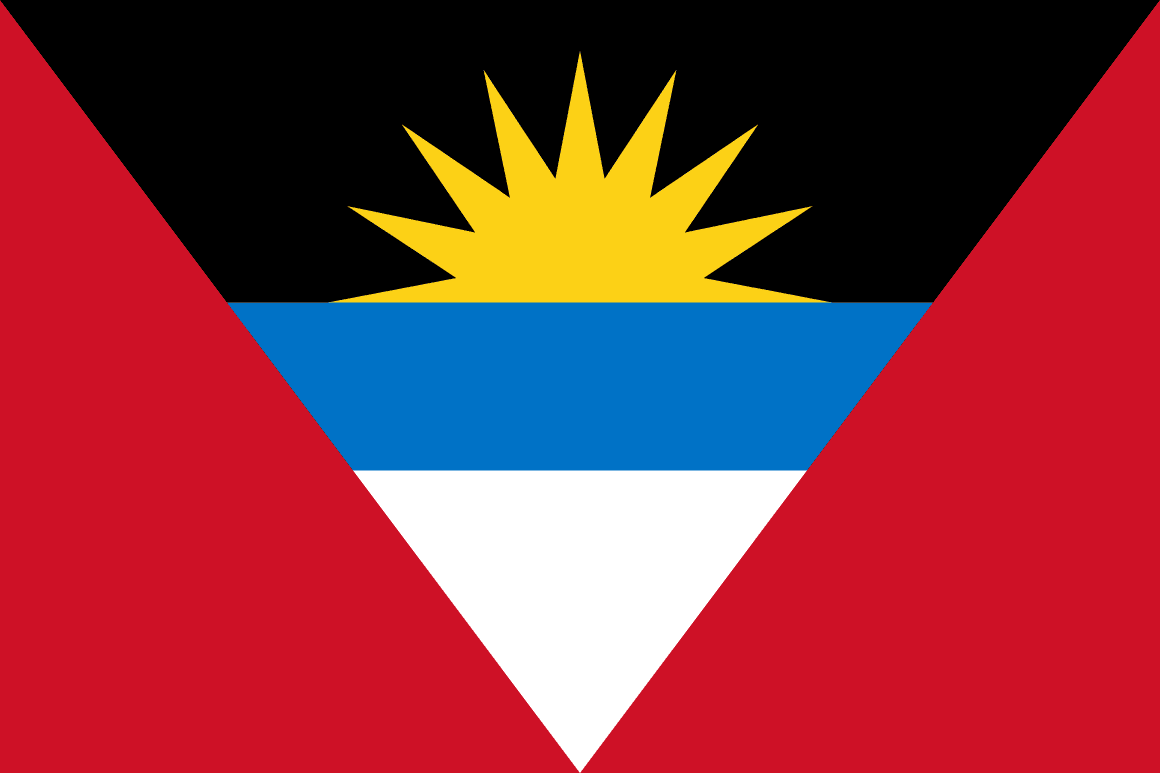
A Brief History of Antigua and Barbuda
- Antigua was first settled by the Ciboney. Native American hunter-gatherers, around 3100 BC. They were followed by the pre-Columbian Arawak-speaking Saladoids and then the Caribs. Antigua is known as Waladli (or ‘Our Own) by the native population, but was named Antigua (Spanish for ancient) by Christopher Columbus, after an icon in Seville Cathedral, "Santa Maria de la Antigua" - St. Mary of the Old Cathedral. Apparently, he made a vow to name many islands after aspects of St Mary that year.
- Barbuda is Spanish for 'bearded'. It's thought it might refer either to the male inhabitants of the island, or the bearded fig trees found there.
- Antigua was colonised by the British, from St Kitts, and became Britain's 'Gateway to the Caribbean' in 1632. Barbuda followed, in 1678. Christopher Codrington settled on Barbuda in 1685 and was handed control of the island. at this point the island was known as Dulcina. Tobacco and then sugar was grown, on both, worked by a large population of slaves transported from West Africa, who soon vastly outnumbered the European settlers.
- After prolonged wrangling, both internal and external, Antigua and Barbuda gained full independence on 1 November 1981; Vere Bird became prime minister of the new country.


Antigua and Barbuda - Facts and Factoids
- Antigua and Barbuda consists of two major inhabited islands, Antigua and Barbuda, and a number of smaller islands. including Redonda, Guiana Island, Bird Island, and Long Island.
- Antigua measures around 108 square miles (280 square km). It is mostly low and undulating, but in the west there are volcanic rocks that rise to 1,330 feet (405 metres). There are no rivers.
- Barbuda, formerly called Dulcina, sits 25 miles (40 km) north of Antigua. It is a flat coral limestone island and it receives less rainfall than Antigua. Codrington is the only settlement and it sits on a lagoon to the west.
- Redonda is an uninhabited volcanic rock, home to many seabirds. Redonda means round. Apparently, this tiny island is actually its own kingdom, with its own king. A Montserratian trader called Shiellin announced this (he was the king, he said) in 1865. The island is inaccessible, except by boat, in the right sea conditions. It's actually closer to both Monserrat and St Kitts, than to Antigua.
- The economy relies largely on tourism and the country is trying to position itself as a luxury Caribbean escape.
- However, there's been a more recent income stream, as tech companies vie for addresses using the country's internet domain -.ai
- Barbuda also exports a lot of fish, especially lobster.
- The permanent population is approximately 100,000, with 97% residing in Antigua.
- St. John's, Antigua, is the country's capital, major city, and largest port.
- Mount Obama is the highest point. The name was changed from Boogy Peak (sometimes written Boggy) on 4 August 2009, when it was renamed after Barack Obama, who has his birthday on this day. The former title, Boogy Peak, came about because slave masters told the slave stories about the Boogy Man who took spirits and lived on the mountains. Their attempts to dissuade escapees weren't always successful.
- Fungie, pronounced foon-jee is the national dish. It's cornmeal with a vegetable mash, sauce and saltfish (usually).


Is Antigua and Barbuda a Safe Place to Travel?
Antigua and Barbuda is generally a very safe destination for travellers; the vast majority of holidays passing entirely without incident. Serious crime rates are low across both islands, and tourist hubs like Jolly Harbour and English Harbour feel exceptionally secure and welcoming.
However, standard holiday precautions are still necessary, such as keeping valuables secure to prevent opportunistic petty theft on busy beaches and avoiding unlit coastal stretches after dark. And check local regulations. It is illegal for civilians to wear camouflage clothing, or to smoke in public spaces. Finally, take extra care when swimming at unsupervised beaches, because of sudden, strong ocean undercurrents, and watch out for potholes and stray livestock on rural roads.
How Expensive is Antigua and Barbuda?
Antigua and Barbuda caters heavily to the luxury end of the travel market, so expect to pay more than many other Caribbean islands. Because it is a small island nation, the vast majority of consumer goods, foodstuffs and fuel have to be imported from abroad, driving up retail and dining prices across the board.
Accommodation is the largest travel expense, ranging from modest inland apartments (I did pretty well in Barbuda) to incredibly premium beachfront resorts which can easily run to hundreds of pounds per night. Dining out also carries a high premium, particularly since bills frequently include a combined addition of seventeen per cent sales tax and an automatic ten per cent service charge.
Whilst hiring a car is relatively straightforward and public minibuses are exceptionally cheap, standard airport taxi transfers operate on flat government rates that add up quickly. Reduce costs by travelling during the low summer season when hotel rates drop significantly, purchasing local produce at open markets rather than buying expensive imports at supermarkets, and carrying physical cash to settle smaller transactions.

Antigua and Barbuda - Essential Travel Info
| ategory | Requirement / Information | Data for Antigua and Barbuda |
|---|---|---|
| Border and Entry Control | Visa Regimes | Visa-exempt for tourist stays of up to six months for British citizens, as well as nationals from the EU, US, Canada, and Australia. Other nationalities must apply for an electronic visa (e-Visa) via the official government portal, prior to travel. |
| | Passport Regulations | Passports must be valid for at least six months from the date of arrival. Visitors must possess a valid return or onward ticket and complete an online Immigration and Customs Declaration form before landing. |
| Finance | Accepted Currencies | Eastern Caribbean Dollar (EC$ / XCD). The US Dollar ($ / USD) is also universally accepted and widely circulated across both islands, with change frequently returned in local EC dollars. |
| | Payment Ecosystem | Mainly card-friendly, with major credit cards (Visa and Mastercard) widely accepted at large resorts, upscale restaurants, and car hire firms. Cash is still highly essential for local beach bars, taxi drivers, smaller craft markets, and when travelling across Barbuda. |
| | Banking and ATMs | ATMs are widely accessible across Antigua, particularly in the capital, Saint John's, and major marina hubs, dispensing Eastern Caribbean Dollars. There are only two unreliable ATMs on Barbuda, with low daily limits so check your cash before getting on the ferry. |
| | Tipping Culture | Discretionary but customary. A service charge of 10% is automatically added to the bill at most restaurants and hotels; however, if it is excluded, leaving a 10% to 15% tip for good service is standard. Tipping taxi drivers and tour guides is 'highly appreciated'. |
| Electrical and Technical | Plug and Socket Types | Primarily Type A and Type B (American flat-pin style), though some older heritage properties or specific British-built resorts still feature Type G (British three-square-pin style). |
| | Voltage and Frequency | Dual-voltage system depending on the property. Most domestic locations operate at 230 V at 60 Hz, but many tourist resorts supply a standard American-style 110 V line. Dual-voltage travel adapters are strongly advised. |
| | Internet and Connectivity | Good broadband and mobile networks (powered mainly by Flow and Digicel) cover the tourist coastal corridors. Complimentary Wi-Fi is widely available across major holiday resorts, but broadband speeds can drop notably when exploring remote rural beaches or inland walking trails. |
| Health | Water Potability | Generally safe in major resorts, where water is processed through advanced desalination systems. However, it doesn't taste great so most travellers prefer drinking sealed bottled or filtered water, and that is definitely recommended when visiting rural villages or Barbuda. |
| | Emergency Contacts | Contact emergency services for urgent Police, Fire, or Ambulance services from any phone. For maritime, sailing, or sea rescue emergencies, contact the Antigua Barbuda Search and Rescue (ABSAR) team directly on +1 (268) 562-1234. |
| | Vaccinations | No mandatory immunisations are required for standard entry, except for a valid Yellow Fever vaccination certificate if arriving from or transiting through an officially declared yellow fever transmission-risk zone. |
| Communication | Language | English is the sole official language used universally across all commerce, administration, and signage. Antiguan Creole is spoken colloquially among locals. |


What To See on Antigua and Barbuda?
- This is an economy that is very dependent on tourism, especially in Barbuda.
- The climate, again, especially in Barbuda, is classified as tropical marine, which means that there is little seasonal temperature variation. In January and February, the coolest months, the average daily high temperature is 27 °C (81 °F), while in July and August, the warmest months, the average daily high is 30 °C (86 °F).
- Antigua and Barbuda claims, conveniently, to have 365 beaches, many of them beautiful. Barbuda's coast is virtually lined with beaches. 'Pink sand' and karst rock formations are found on both. Water sports abound and Stingray City is a popular excursion from Antigua. Antigua is also home to historical sites, most notably Nelson's Dockyard and old sugar mills.
- Barbuda’s Codrington Lagoon National Park has the largest frigate bird colony in the western hemisphere. More than 2500 roost in the mangroves every year. The best time to visit is mating season, from September to April.
- Read about my trips to Antigua here and cruising when I called into Antigua here.
- Read about my visit to Barbuda here.
- Read about my day trip to Montserrat from Antigua here.
Saturday - Great Bay and a Plethora of Caribbean Martins
I've flown into Sint Maarten from the British Virgin Islands. The contrast between here and the Virgin Islands couldn't be more marked. I've gone from quaint backwaters to full on 'civilisation'. One guide book refers to this as the Las Vegas of the Caribbean. The narrow road from the frighteningly efficient spanking new airport is lined with high end shops almost the whole way. Chopard, Tiffany, diamonds abound, as you would expect, interspersed with the odd casino. Philipsburg is Cruise Ship Central. And even though this part of the island is Dutch everyone speaks English with American accents and trades in dollars. Though, here on the Dutch side, they also use the pre-euro florins.
Sint Maarten, The Friendly Island - in a Nutshell
- Most of the Caribbean islands round here (Leeward and Windward) were named by Columbus. (Actually he named Nevis St martin but the name was accidentally transferred.) Sint Maarten was discovered on the feast of St Martin. It's a teeny island, unusually divided into Saint Martin and Sint Maarten, a bit of the Netherlands and a bit of France.
- The island was nominally a Spanish colony, but the Dutch found it a convenient halfway point between their colonies , settled there and began mining salt. After ongoing tussles the Spanish repossessed the island and then abandoned it again. Now it was the turn of the French and Dutch to fight over the land. The Dutch colonists came from St. Eustatius, while the French came from St. Kitts. Eventually, but nota ta all amicably despite the document's name, they signed the Treaty of Concordia in 1648, which divided the island in two.
- Both French and Dutch imported large numbers of African slaves to work the plantations, but as their numbers grew, the slaves staged rebellions, and in 1848, the French abolished slavery in all their colonies including the French side of St. Martin. Slaves on the Dutch side of the island protested and threatened to flee to the French side to seek asylum. The local Dutch authorities then had to follow suit or slaves just escaped to the other side of the island.
- The Dutch section of the island takes up just under half of the land area.
- Sint Maarten is a constituent country of the Kingdom of the Netherlands, along with the Netherlands, Aruba and Curaçao. countries
- Sint Maarten is dubbed The Friendly Island.


Today's beach is Great Bay. The hotel and sands are ultra-boutique, white canvas umbrellas, rattan chairs and piped saxophone - from seven in the morning. Hulking ships monopolise the horizon. I can see the sailing clipper I am booked to travel on for the next week bobbing around behind them. It looks really tiny in comparison. The quay where it is moored is called Dock Maarten - really.
And now perhaps I should go get a Martini?


Caribbean Cruising On Board the Star Clipper
One of the three tallest ships sailing the seven seas. It's all very - well, nautical. Brass and wood with navy and gilt upholstery, and lots of knots. They haul the sails up ceremonially every day to the Van Gelis 1492 theme tune. It's surprisingly moving, though there isn't much wind and we use the engines most of the time. I'm secretly quite glad. The sails are very picturesque, but I'm told the tall masts make for a lot of rolling if the sea is remotely rough.
The crew are very cosmopolitan - Filipino waiters, Goan sailors, Eastern European officers, Swedish Vikings on the sports team. It's their job to entertain us at night as well as look after us during the day. They deliver an amateur variety package, including comedy sketches and a fashion show, involving a surf board. The passengers are mostly retired Americans. Others are English, French, German, I'm the only single on board.


Sunday - Nevis - Pinney's Beach

Overnight, to St Kitts, but we're not stopping. Our goal today is Nevis ands Pinney's Beach. Columbus thought the central volcano on this island looked as if it had snow on it (nieve), so that's how it got its name. Last time I was here I got the ferry over from St Kitts and explored the tiny main settlement of Charlestown. It’s very colonial, but then so are both islands, They were 'The Mother of Colonies'.
More plantation houses, sugar mills and forts than spectacular coasts. The beach here is pretty, but narrow. There’s not a lot of shade, unless I wander up to the one hotel, and the sports team forgot to bring the umbrellas. So I get the tender back to the ship and lounge on the deck, by one of the two wedge shaped swimming pools. Most of the Americans are very friendly. I know everyone's life history already.


Monday - Dominica - Cabrits Beach
Dominica (named as it was discovered on a Sunday) is famed for its natural beauty and lush foliage.
I skirt Cabrits Beach – it’s black volcanic sand - on my way up into the mountains for a nature hike in the rainforest. There are very few buildings, certainly more vegetation than habitation.
Dominica, Nature Island of the Caribbean -in a Nutshell
- Dominica is nicknamed 'Nature Island of the Caribbean'. It is purported to have 365 rivers, one for each day of the year. Though no-one seems to have checked this convenient number. This is another island that passed from French colonists to the British. It became independent in 1978.


Unfortunately, the guide puts in a no show and so do most of the birds. It’s damp and misty, more Jurassic Park than cheerful Caribbean. There is forest, stretching as far as the eye can see, with just glimpses of cobalt ocean. The canopy stretches above. There are tree roots like the flanges of giant wheels and lianas tangle around them. The odd hummingbird zigs in and out. Any chance of an additional sighting is thwarted by the shrill tones of Claire from Key West. I don't think she pauses for breath once, on the whole circuit.
I go to avail myself of a relaxing massage on the upper deck when I get back. But I can still hear her squeaking away in the bar below.

Tuesday - Les Saintes - Anse Crawen
Les Saintes are nine weeny islands (two are inhabited), which are part of Guadeloupe. They are very green and very hilly. Today's beach is Anse Crawen, on the quietest part of Terre-de-Haut Island, There is a log to perch on, plenty of sand flies and some reasonable snorkelling round the headland. As on most cruise ships, there's no shortage of food. There are always snacks available and you can order what you like from the dinner menu. Tonight, I have three main courses.


Wednesday- Guadeloupe - Caret Island
First of all, I'm famous. There was a trivia quiz last night where you had to run up and beat a drum. As most of the questions were geographical I won fairly easily, seeing off the French and the Germans. So today everyone is congratulating me. That wouldn't have happened in the UK, where I would have been ostracised as a ‘know all.’
The ship has taken us to Guadeloupe proper. We've docked at the little town of Deshaies, on the northwest tip of the butterfly. It's famous as being the location for the filming of Death In Paradise, which regularly features the gorgeous local beaches. The distinctive red steepled church dominates the skyline, but it’s a short acquaintance.
We pile into a creaky bus and zip across the top of the butterfly wing, to Sainte Rose, to pick up a little motorboat. Thence, sputtering through a scattering of mangroves, eyed warily by pelicans and egrets perched on almost every available branch, to a proper little reef and some decent snorkelling. Then lunch on minuscule Caret Island, so swathed in palm trees we have to be seated on lashed wooden poles laid on the sand. Classic Robinson Crusoe.
Guadeloupe - in a Nutshell
- Guadeloupe is not a country, but is an overseas département and region of France, so the currency is the euro and flights to France are 'domestique' .
- The archipelago contains many islets and four inhabited islands, other than Les Saintes.
- The original colonial name (bestowed by Columbus) was Santa María de Guadalupe.
- The two main islands, Basse-Terre (west) and Grande-Terre (east), form a butterfly shape.


Then, dinner with the captain. This involves a lot of champagne (before he goes onto scotch) and conversation that refuses to veer from politics, ships and alcohol. He's from Ukraine and is clearly still mourning the demise of the Soviet Union.

Thursday - Falmouth Bay - Pigeon Beach - Antigua
I've been in Falmouth Bay before - it's just round the corner from English Harbour and is the Caribbean Mecca for yachts belonging to the rich and famous. The main pastime is trying to guess who owns what. And I'm feeling a little queasy, as the ship is rolling something rotten, there's been a swell all night. Antigua is a country of beguiling bays and is reckoned to have 365 beaches (that convenient number again), so there is nothing for it but to head to nearby Pigeon Beach, which is yellow and gorgeous, and laze on the sand.


Friday - St Barthelemy - La Plage de St Jean
St Barths is a replica of the Côte d'Azur. The capital, Gustavia, is full of high end shops - and beautiful people. La Plage de St Jean has sand floored beach bars, plush hotels and the whitest sand, with water for which the word aquamarine was invented. The beautiful people parade up and down in their designer gear. It is très, très chic, with prices that are très, très high to match.
Alongside the beach, is possibly the world's smallest and scariest airport. The air taxis come in over the road which runs across the top of the island (the cars have to stop) and bump down the hill to the beach. When they take off, they zip straight over our heads, accelerating madly in a bid to gain height, before they hit the sea. It's a local pastime to sit in the water and watch them; it's a bit like playing Russian roulette.
Our last night on the boat. Much to everyone's amusement the captain asks for my email address. I think he just wants some photos.
St Barthelemy - in a Nutshell
- St Barthelemy (named after Columbus' brother) and commonly called St Barths, is another piece of the French West Indies, an overseas collectivity. The island was a Swedish colony in Napoleonic times. Hence the capital is called Gustavia. It was the only Swedish colony in the area and the islanders voted to return to French rule when a century had passed
- St Barthelemy was once also part of Guadeloupe, which is an overseas département of France. For this reason, it is part of the European Union and the euro is used as currency. In 2003, the people voted in favour of becoming independent from Guadeloupe and the French Parliament passed a bill granting autonomous overseas collectivity status in 2007 (at the same time as St Martin).
- The slogan of St Barths, plastered everywhere is :Toi Là! Je t'aime! (Hey you! I love you!)


Saturday - St Martin - Grand Case
Back on dry land, in St Martin. This time nipping across to the French Side, as the border signs say. I'm getting a free ride with Bob and Sandra from Somerset, as they are booked into the same hotel. It's truly a schizophrenic island, it's much quieter over here, but still relatively built up and very clean, organised and prosperous. There is no official border, other than the sign, but you have to make an international phone call to talk to the other side and here the first language is definitely French.
My gorgeous little hotel is right on Grand Case Beach, a large turquoise bay, with views across to eel shaped Anguilla. Grand Case is renowned for its French restaurants - about 50 of them lining the waterfront. I have views across the bay from my balcony and a nonstop natural history documentary by my door. Two straggly little dove chicks are ensconced in an untidy nest that is balanced precariously on a palm tree branch. Mummy and Daddy Dove watch anxiously from the telegraph wires, cooing loudly when I walk past. Dad forages around the hotel balconies for food and Mum arrives at regular intervals to feed her offspring or to attempt to perch on top of them, even though there really isn't enough space and it seems that she will topple out at any moment.
St Martin, the Other Part of The Friendly Isle - in a Nutshell
- Like St Barths, St Martin was part of Guadeloupe, an overseas département of France. and it is now an autonomous overseas collectivity (from 2007). So, it is part of the European Union and the euro is used as currency.
- It is the larger, but less densely populated part of the island of St Martin.


Sunday - Maho Beach - Ducking Planes - a Caribbean Pastime
Today takes the three of us to Maho Beach, on the Dutch side, which is pretty, but crowded, as it offers more airport entertainment (this seems to be a Caribbean pastime). This beach is right at the end of Princess Juliana International, so visitors get their kicks by hanging off the perimeter fence to experience the force of the slip stream as the jets take off. Some of the thrill seekers are blown right over. There are signs saying its dangerous (!) but access doesn't seem to have been restricted in any way. When planes come in over the sea to land, the voyeurs leap about, waving at the poor pilots, as they roar above us.


Monday- Marigot Bay
My trip to Anguilla is cancelled as it is raining. Not all bad news as it clears up quite quickly. It's exhausting lying on a beach bed all day and I can at least see Anguilla across the water. We eat Creole supper at a Lolo (local food restaurant) on Marigot Bay, lights twinkling on the marina.
Tuesday - Il Pleut - Orient Bay Beach
Today, it really is raining, with a vengeance. There isn't much to do on St Martin except go to the beach or shop and most of the shops are the expensive duty free kind. Orient Bay is one of the contenders for best beach on the island - there are several, but it isn't very welcoming. The damp Caribbean weather is encouraging the mosquitoes; this is slightly worrying as there are even PA announcements on arrival at the airport here warning about the dangers of being bitten. Dengue fever is more of an issue than malaria and we are told there is an increasing threat also from chikungunya fever. Neither has a cure. In addition to the usual mosquitoes there are pesky miniature versions called 'no see ums' that zip in the smallest crack the moment the door is opened.


Wednesday - Baie Longue
Today I fly to Antigua so, perversely, the weather is gorgeous. A quick stop at Baie Longue on the way to the airport, just to say good-bye. The flight is a disaster though. The Caribbean carrier plane is badly delayed (LIAT = Leaves Island Any Time) with no announcements whatsoever. Eventually it is cancelled altogether and I am squeezed onto the earlier flight, which is even more badly delayed. I arrive in Antigua minus my luggage and nobody seems very sure about where it is or how I will get it back. And it was only a 30 minute flight...I am exceedingly grumpy when I eventually arrive at my hotel sans toothbrush, well sans everything.
Thursday - Jolly Harbour, Antigua
I’m in Jolly Harbour, where I’ve also been before, but I'm still grumpy, despite the name. My hotel has definitely seen better days (it’s only two years old) and the service is decidedly indifferent. It's trying to rain again. However, there is some Caribbean cheer, as my bag arrives mid-morning and entertainment is provided by three kittens who have decided to adopt me and take it in turn to sit on my veranda.
I saunter down to the nearest stretch of sand. On the way, I pass a large supermarket and a motley collection of shops and cafes, gathered round a small yacht basin that’s part of a large lagoon. There’s a huge hotel formed of several large blocks surrounded by an unkempt garden and a lot of wall. It has a gigantic beach café that serves copious amounts of alcohol, so everyone is indeed making merry. It’s all a bit uninviting, nowhere near as pretty as it used to be. Maybe it’s the weather colouring my vision.


TGIF in the Caribbean
A last chance to enjoy the heat and colour. It's sunny again, well naturally, as I'm on my way home from the Caribbean. Life's a beach...
Newsletter Subscription
Stay in touch. Get travel tips, updates on my latest adventures and posts on out of the way places, straight to your Inbox.
I keep your data private and only share your data with third parties that make this service possible. Privacy Policy. No spam I promise. Unsubscribe any time.