High Expectations
‘I would tell you a joke about a mountain, but I'm worried you wouldn't get over it.’
It’s no secret that I love scenery – nature is truly amazing and awe inspiring. And beaches and azure water rate very highly in my mind. But mountain vistas are up there too. It’s a subject on which I can range far and wide – sorry, but there’s a lot of scope for puns in this subject. There actually is a mountain in Pakistan called Pun Mah. That’s hill-arious and it’s all downhill from here...............
Mountains, a vast natural playground offering, ironically, both high-adrenaline adventure and peaceful isolation. There are the rugged terrain technical challenges like rock climbing, mountaineering, scrambling, and mountain biking. Also on the sporting list; hiking, backpacking, horse riding, and trail running.
I can’t think of much that’s more satisfying than a walk at altitude, with great views. Though backpacking I’ve given up. Much too strenuous. Being at one with nature may be a cliché, but the peace and spiritual awareness that I’ve found in the mountains at times, is so wonderfully satisfying it’s hard to describe satisfactorily. Perhaps the vast scale shrinks our personal worries and makes us feel more connected to the world
That’s why the alpine environment also offers a sanctuary for leisure and creativity, drawing people to camp (I keep trying to give that up too) under clear unpolluted skies, photograph and paint dramatic landscapes or diverse wildlife, and generally escape the stress of city life.


Mountain Weather (or Not)
Weather, of course, is a crucial factor. Alpine weather is notoriously changeable. Clear, sunny skies provide the perfect window for high-altitude trekking, peak bagging, and technical climbs, but the famously unpredictable alpine climate means sudden afternoon thunderstorms can quickly force adventurers below the tree line to avoid exposed ridges and lightning. When rain moves in, slick rock faces and washed-out dirt trails pivot outdoor plans toward lower-altitude forested walks or cosy indoor village exploration.
As the seasons shift, freezing temperatures and heavy snowfall completely transform the landscape, shutting down summer trails, but opening up the slopes for a whole new season of skiing, snowboarding, ice climbing, and snowshoeing.
Mountains Affect the Weather (The Rain Shadow Effect)
Mountains, in their turn, heavily influence weather patterns. They act as massive walls which block weather systems. When wet air hits a mountain, it’s forced upward, cools down, and dumps rain on one side. By the time the air crosses to the other side, it’s completely dry. A lush forest on one side of a mountain range and a desert on the other.
Mountains Matter for Human Survival


Mountains are also massively important geographically. They act as the world’s water towers, supplying fresh water to more than half of the human population. They’re also home to about half of the world's biodiversity hotspots, providing habitats for thousands of unique plant and animal species that can't survive anywhere else.
Travelling at Altitude
When travelling at altitude: first of all, take the right gear – as I’ve discovered it's not a good idea to be blasé about that unpredictable weather. The technical stuff, like ski gear, isn’t cheap. But mountain sports without the right gear are just plain dangerous.
Second, be prepared for altitude. Anything over 6,000 feet can cause problems. Lack of breath and giddiness. the thin air changes brain chemistry and perceptions at extreme heights.
Not to mention the fact that tea tastes odd, as the water doesn’t boil at a high enough temperature. Water boils at 71 degrees Celsius on the top of Everest. That particular location may not be as issue for you, but sickness might.
I had been fine on visits to mountains until I was in Bolivia, much more recently. For some reason then I was quite badly affected with altitude sickness. Coca leaves ( handed out by the handful) may help. But I needed Diamox. Doctors may prescribe it before you go.
Tips for High-Altitude Travel
- Acclimatise slowly: Spend a day or two resting at base altitude before doing any heavy physical activity.
- Keep drinking: The air is incredibly dry up high, and your body breathes faster, meaning you lose water rapidly.
- Pack for four seasons:
- Don't forget UV protection: The atmosphere is thinner, so sunburn happens significantly faster, at high altitudes.


Transport at Altitude
Historically, alpine travels relied entirely on wooden sledges, or strings of pack animals like mules and yaks to haul cargo over treacherous, unpaved trails and was often entirely on foot. I can still choose traditional human-powered trekking, or guided pack-animal trips if I want to step off the beaten path and play the role of early explorer. But today, my journeys through the peaks mainly rely on highly engineered, high-speed transit that transforms what used to be a gruelling expedition into ( I hope) a comfortable, scenic adventure. Instead of facing days of intense physical exhaustion on foot, I can now effortlessly glide over deep chasms in climate-controlled aerial gondolas, ride specialized cogwheel trains through solid rock tunnels, or drive over superbly engineered mountain roads.
Navigating those mountain roads isn’t easy. Switchback routes, with endless hairpin bends require skilled driving, using low gears for engine braking on long downhills, to prevent the brakes from overheating. And, a head for heights, as you try to concentrate on the road ahead and not peer over the sheer drops to the side. Winter conditions may require snow chains for tyre grip. But it’s definitely worth it, if there are enough viewpoints to pull off and admire those panoramas.
For a more relaxing journey, up from the valleys, specialized rack (or cogwheel) trains use toothed centre rails to climb steep inclines directly through the peaks (Cogwheel trains can safely climb slopes of 45% to nearly 50%. Ordinary trains can only do 10%) ). To reach high-altitude viewpoints, ski resorts, (often doubling as hiking trailheads in the summer) utilize aerial gondolas, cable cars, and funiculars, which lift me comfortably over deep chasms in minutes. Walking may still be on the agenda, once I’m up there, of course. Not many roads up top.


Over-tourism in the Mountains
Alpine environments are fragile and not always well looked after, as profit nowadays wins out over future business and sustainability. Everest is nowadays notorious for litter and traffic jams. Ski resorts are having to rely increasingly on artificial snow making, which uses energy and drains local water supplies.
So, I try not to get frustrated about reservation systems, entry caps, or mandatory local guides to protect the trails and wildlife
Which Mountains to Visit?
Spiritual and Cultural Significance
Given their propensity for awe and wonder it’s not surprising that cultures across the globe, for thousands of years, have treated mountains as sacred places, homes of gods, or bridges between earth and heaven, like:
- Mount Olympus (home to the gods) or Mount Parnassus (the navel of the world and the site of the Oracle of Delphi) in Greece
- Mount Fuji in Japan (Personified as a living deity in Shintoism and Buddhism) and absolutely worth the trip, especially at cherry blossom time
- Machu Picchu, in Peru (surrounded by holy mountains). There’s definitely something extraordinarily peaceful and relaxing in the atmosphere, in places like this
- Denali, in Alaska, often lost in clouds and a deeply sacred and holy mountain to the indigenous peoples of Alaska. The Koyukon Athabaskan people bestowed the name Denali, a term meaning 'The High One' or 'The Great One'
- Or even Glastonbury Tor, in England.


Scenic Train Journeys
Let the train take the strain. And book on one of the world's most scenic mountain railways
Europe
The Swiss Alps are favourites:
- The Glacier Express (Switzerland): known as the world’s slowest express train, this route connects Zermatt and St. Moritz. The journey travels across 291 bridges and via 91 tunnels, offering panoramic views of snow-capped peaks and sheer rock walls through glass-roofed carriages.
- The Bernina Express (Switzerland to Italy): this UNESCO World Heritage line climbs up to the Bernina Pass at 2,253 metres above sea level without using a cogwheel system. It features the famous Brusio spiral viaduct, where the train loops 360 degrees to navigate the intense drop in elevation.
- The Jungfrau Railway (Switzerland): a cogwheel train that blasts directly through the rock face of the Eiger Mountain to reach Jungfraujoch, the highest railway station in Europe at 3,454 metres, rewarding the traveller with close-up views of the massive Aletsch Glacier.


The Americas
- The Rocky Mountaineer (Canada): operating through the heart of the Canadian Rockies, this luxury daylight-only train chugs past jagged peaks, deep river canyons, and rushing waters, along routes connecting Vancouver to Banff, or Jasper. I used the much cheaper but very well organised national tourist train VIA Rail, instead.
- The Hiram Bingham / PeruRail (Peru): this high-altitude line tracks the rushing Urubamba River through the Sacred Valley, climbing steadily up into the cloud forests to bring tourists directly to Aguas Calientes at the foot of Machu Picchu.
Asia
- The Toy Trains of India - the Darjeeling Himalayan Railway and the Kalka-Shimla Toy Train. The former, narrow-gauge steam railway uses a series of loops and zigzags (switchbacks) to claw its way up the lower Himalayas, giving riders sweeping views of tea plantations and Mount Kanchenjunga. The UNESCO World Heritage Shimla Train, usually relies on diesel nowadays, but offers a (very) slow-paced journey (5-6 hours) through the stunning Shivalik foothills of the Himalayas. It climbs gradually from 656 metres up to 2,076 metres, while steering through 102 tunnels, 864 bridges, and 919 sharp bends. As well as the scenery, there’s plenty of enjoyment from watching the locals both on and off the train
Oceania
- The TranzAlpine (New Zealand): Crossing the South Island, this train scales the dramatic Southern Alps: traversing breathtaking viaducts (it’s always fun trying to capture the ends of the train in the photos) and offering views of clear alpine rivers and deep beech forests.
The Challenge of the Highest


Most of us are fascinated by the biggest and tallest. The highest mountains in the world are also the newest and sharpest. The Himalayas were formed by two massive landmasses (India and Asia) crashing into each other (only 50 million years ago), and they are still growing taller every year. Between 80 and 55 million years ago, during a massive mountain-building era known as the Laramide Orogeny, the ancient Farallon tectonic plate slid from the Pacific Ocean and beneath the edge of the North American plate, at an unusually shallow, nearly flat angle. It squeezed, crinkled, and pushed up the overlying crust, creating the towering peaks of the Rocky Mountains, far from the ocean. The Andes was again built by a westerly oceanic (Nazca) plate, sliding underneath the continental plate, to create the longest continental mountain range in the world.
And the quest for personal fulfilment leads us to want to climb these highest peaks (Cue Climb Every Mountain). There’s the Seven Summits – scaling the highest mountain on very continent. ( Can you name them by the way?) I met an American cardiologist in Iraq, who had done this. Though even this is contentious as there is debate over which exactly is the highest mountain on at least two continents and that centres on exactly how you define the continents. Elbrus or Mont Blanc in Europe (Elbrus is in Russia). Australia is even more difficult depending on whether you're talking the island, the continent of Australasia or Oceania. Mount Wilhelm, on New Guinea, is geographically in Oceania, but geopolitically in Asia, along with the rest of Indonesia. I suppose the answer is to climb all the contenders.
Q What is the most dangerous mountain in the world?
A Kill-a-man-jaro.

In the UK, we have mountain challenges galore, even though our mountains may be puny in comparison with the world’s highest ranges. They are still demanding (and sometimes technical) climbs. We have the Three Peaks Challenge (highest national peaks, Snowdonia, Scafell Pike and Ben Nevis all done consecutively in one day, if you drive between them. Some run.) And hikers enjoy Munro Bagging. That’s attempting to climb all 282 Scottish peaks over 3,000 feet.
In England, we have Wainwright Bagging. These are 214 Lake District fells identified by Lake District fan, Alfred Wainwright, who wrote seven guide books on the area. The Wainwrights are not chosen by height, but according to general appeal and scenic value.
When younger and fitter, I used to lap up this sort of thing. But I’ve never aspired to climbing. I go giddy two metres away from a cliff edge. I have, however, seen Everest, from a small tourist plane. (These crash all too often at Kathmandu Airport.)
Skiing
I used to ski regularly too. Though never with great élan. I liked the cruisy blues and mid-range red pistes. The blacks (if properly labelled) usually resulted in far too much side stepping or scuffing. Skiing is sublime when the sun is out and you reach the top, for those fabulous views across the range and down to the valleys. There may even be an atmospheric café or a schnapps ice bar to hand. Though I’m not sure that improves my skiing.


It took me some time to master the lift system. The being scared of heights thing is not conducive. But after a while I didn’t mind being dangled in a chair over a vast ravine so much. And I learned the art of sitting on a T bar without catapulting off the poor person on the other side (it’s insisting on riding them alone) or capturing the button on a Poma lift and not getting bounced off.
Getting off a chairlift is still in need of improvement. It’s the jumping off and keeping your balance that's the issue. During my one and only foray into Scottish skiing, at Glencoe, I had to carry my skis (far too far) up to the ski station and onto the lift. There was no snow at these lower heights. There wasn’t much at the top; it was boilerplate icy and so foggy you couldn’t see the run anyway. (It's called a white-out in the mountains.) But it didn’t matter. I over-balanced getting off the lift and fell over. The next chair through caught the back of my head and knocked me out.
Skiing in mainland Europe is generally very different. France is super organised, with self-catering accommodation, by the lifts, huge ski areas and excellent take-out food (of course). Austria – far more character, night life, good food, chalet style inns, pretty views and longer walks carrying your skis. Switzerland somewhere between the two. At a price. Italy – variable, sometimes cheaper. Bulgaria - well…
I only skied once in the Americas – in Canada. It was surprising, with beautiful wide slopes and upmarket catering. Carpets in the piste side eateries.
Simply Scenic


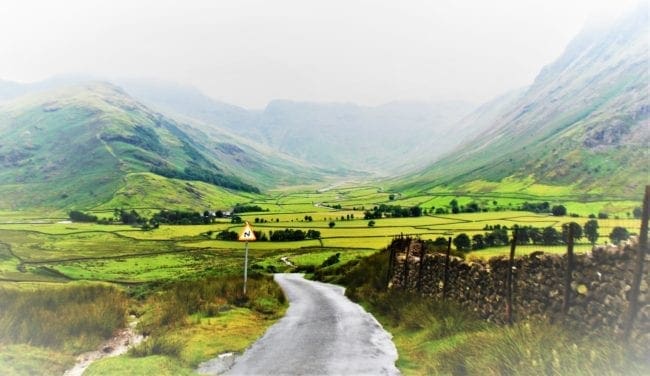
But forget all the activity. Mountains are just gorgeous.
What singles out the best? Height has to be a factor, but an individual mountain may not have a great profile. It depends on the difference between the height of its peak and the land around it. Some of the most impressive mountains are the volcanoes of Latin America, or Indonesia, for this reason.
My favourites: the Andes range (it really is awesome), especially Patagonia. Spring walks in Torres del Paine are fabulous. The volcanoes of Chile are also wonderful - but best seen from the air.

A close second, the mountains of the Karakorum Highway, in Pakistan, especially the jagged Hunza range, running down to Lake Attabad. The vistas, where the Karakorum and Himalayas ranges meet, and up to Nanga Parbat, are simply stunning. It’s a shame the road is so bad (and occasionally terrifying).
For amazing colour, I need to mention the Pamir Mountains, on the Kashgar Road to Kyrgyzstan, and throw in the Tien Shan Mountains too.
To summit all up, I’ve had some great times, in the mountains.