What is the History of Portugal?
- Portugal's history is long and fascinating.
- The area now known as Portugal was originally settled by the Celtic peoples.
- It was later subject to Phoenician and Carthaginian incursions.
- Portugal was a part of the Roman Empire from 45 BC to 298 AD. What we now call Portugal (well 80% of it and a piece of Spain) was then known as Lusitania (after the Roman god Lusus, son of Bacchus, the god of wine - the area was famous for its sweet wine). This is why speakers of Portuguese are still known as lusophones.
- The Germanic tribe of Visigoths came next, establishing the strong institution of the Church in their kingdom.
- Soon after that came the Arabic invasion and occupation, a time in which many Arabic words entered and formed Portuguese. The name Portugal came from the Roman-Celtic place name Portus Cale ( an early settlement located at the mouth of the Douro River which later became Porto).
- Portugal was occupied for approximately 500 years. King Afonso I was the first king of Portugal. He declared himself king in 1139, after his victory over the Moors at the Battle of Ourique. Portugal's borders then were roughly the same as those today, though neighbouring Spain was then a series of smaller kingdoms.


- Portugal then evolved into the first global power. This was the era of explorers such as Vasco da Gama, Fernando Magellan and Bartolome Dias and Portugal established colonies all over the world.
- Half of the known globe once belonged to Portugal. The Treaty of Tordesillas gave Portugal the eastern half of the "New World". King John II negotiated the landmark 1494 agreement with the Spanish Catholic Monarchs, Isabella I of Castile and Ferdinand II of Aragon, He cunningly pushed the boundary westwards, so as to include Brazil (as well as parts of Africa and Asia.)
- Then came the Hapsburg Philippine Dynasty when three Phillips of Spain took over, as King Sebastian died with no direct heir and his successor, Cardinal-King Henry, died childless in 1580. King Philip II of Spain was the grandson of Portuguese King Manuel I, giving him the strongest bloodline claim. António, Prior of Crato, declared himself king, but was crushed by the Spanish Duke of Alba at the Battle of Alcântara.
- At the same time, the Portuguese Empire fell into steady decline, due to war in Europe and colonial resistance. Portugal lost control over parts of its global empire to Dutch and English rivals.
- The Restoration came in 1640 when a successful palace coup overthrew the Spanish Habsburg governor and the Duke of Braganza was crowned as King John IV, initiating the House of Braganza, although this led to a protracted war against Spain (unitl 1688)
- In the early 1700s gold and diamonds were discovered in Brazil funding the absolute monarchy of King John V and some spectacular Baroque architecture.


- In 1807, Napoleon's armies invaded Portugal. In 1808, the king, Dom João, moved to Brazil (with British help) and proclaimed a single state which he called the United Kingdom of Portugal, Brazil, and the Algarves. The new capital of the kingdom was Rio de Janeiro. The state was disestablished in 1822, after King John VI returned to Portugal in 1821 (there was a military revolt in Porto), leaving his son, Prince Dom Pedro, to rule Brazil.
- In 1820 The Liberal Revolution established Portugal’s first constitutional monarchy and limited royal power.1822
- In turn, Brazil soon (1822) declared independence from Portugal. Crown Prince Pedro becomes Emperor Pedro I of Brazil, stripping Portugal of its most lucrative colony.
- The Liberal Wars followed (1828–1834): a not so liberal bloody civil war between two royal brothers. Dom Pedro (fighting for constitutionalism), who defeated Dom Miguel (fighting for absolute monarchy), leaving his daughter Maria, in charge.
- Eventually, in 1910, the First Portuguese Republic was established, after a Republican revolution that also brought on the King’s resignation. This was followed in 1933 by the Second Republic, also known as Estado Novo (New State) under the dictator António Oliveira de Salazar. Salazar’s motto: “Proudly alone” saved Portugal from taking part (mostly) in both World Wars.
- The peaceful Carnation Revolution, a military coup d’état, finally led Portugal into democracy; the first elections took place in 1975.


Is Portugal in the EU?
Portugal joined the European Union in 1986 and was one of the first countries to adopt the euro on 1 January 1999.
Facts and Factoids
- This is the oldest country in Europe.
- Portugal and England have the oldest diplomatic alliance in the world. The Anglo-Portuguese Alliance was signed in 1373 and is still in force to this day. (The British helped the Portuguese resist Napoleon, principally at the Battle of Trafalgar.)
- Today, Portugal owns two autonomous territories: Madeira and the Azores.
- Portuguese is the official language of eight countries. Over 236 million people worldwide are native Portuguese speakers. Portuguese is the official language of Portugal, Brazil, Cape Verde, Angola, Guinea Bissau, Mozambique, Sao Tome et Principe and Equatorial Guinea. It is also spoken in Goa (India), Macao, and East Timor.
- The University of Coimbra established in 1290 is one of the oldest universities in Europe.

- The oldest bookstore in the world is in Lisbon, Portugal's capital.
- Portugal has the world's largest cork forest and is the largest cork producer in the world.
- Salt cod and grilled sardines reign supreme.
- The Vasco da Gama Bridge in Lisbon, at 7.6 miles, is the second-longest bridge in Europe, after the Crimean Bridge, opened in Russia in 2018.
What is There to See and Do in Portugal?


- A river cruise is a relaxing way to see the beautiful northern part of the country. Portugal - Lisbon, Coimbra and Cruising the Douro from Porto - River of Gold 1.
- Lisbon is a great city with a multitude of sights. Portugal - Lisbon, Coimbra and Cruising the Douro from Porto - River of Gold 1
- Porto is a vibrant and fascinating city. Portugal - Lisbon, Coimbra and Cruising the Douro from Porto - River of Gold 1
- Portugal has a plethora of old monuments - churches and palaces, many of them UNESCO WHS sites - Monuments Around Lisbon
- Portugal is known for its long, surfable coast. It has a coastline that spans 497 miles and is said to have 364 days of surf per year.
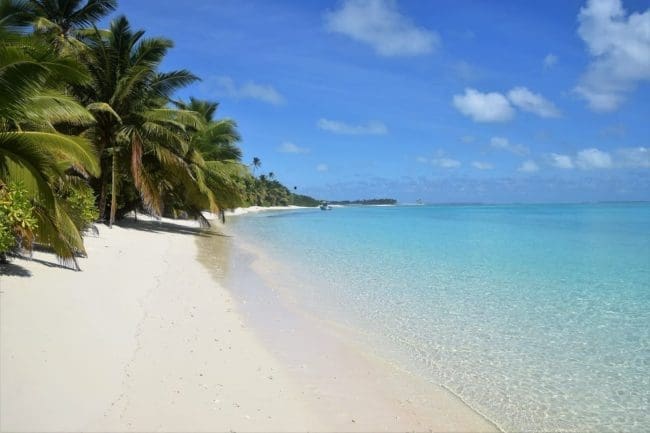
- The Algarve has some of the most beautiful beaches in the world – though the water can be cold
- Both the autonomous territories - Azores and Madeira are well worth a visit