

Republika Srpska
Our group tour has now arrived in Bosnia, actually in the Republic of Srpska, crossing the border from Kotor in Montenegro. I'm on a group tour of the Balkan States - what was once Yugoslavia. In hindsight, more than a few years later, the fact it's in the Republic of Srpska is causing me a problem. I hadn't realised that this counts as another country/territory, as it is self governing. I can't re-number all my territories now, so this is going to have to go in at number 250, out of order, which I know will irritate me constantly.....
Republika Srpska - Facts and Factoids
- Republika Srpska is one of the two entities of Bosnia and Herzegovina, the other being the Federation of Bosnia and Herzegovina.
- It is located in two different section of the country, the northern and eastern parts. Two parts, separated by the self governing district of Brcko, to ensure that Bosnian Serbs do not control a single, continuous territory within Bosnia and Herzegovina, bordering Serbia.
- The entity encompasses approximately forty-nine percent of the total land area of the country and has a population of about one and a quarter million people, mainly Serbs.
- The western portion of the territory contains the administrative centre and de facto capital city of Banja Luka, situated on the Vrbas River. The eastern portion of the territory runs continuously along the international borders with Serbia and Montenegro.

- Republika Srpska operates under a parliamentary system, with legislative authority vested in the National Assembly, which comprises 83 seats. The entity is relatively centralized, although it is divided into 64 municipalities, known as opštine.
- The landscape is mountainous in the south and east, transitioning into flat, fertile agricultural plains along the Sava River valley, in the north.
- Republika Srpska was officially proclaimed in January 1992 by the Assembly of the Serb People in Bosnia and Herzegovina prior to the outbreak of full-scale war and was site of fierce military engagements and extensive territorial shifts during the Bosnian War between 1992 and 1995.
- The war led to the expulsion of the vast majority of Croats and Bosniaks from areas under Republika Srpska’s control, while many Serbs were transported from the Federation of Bosnia and Herzegovina to Republika Srpska.
- The modern internal borders and legal status of the entity were formally recognized and established by the international community through the Dayton Peace Agreement signed in December 1995.
- The entity maintains its own separate constitution, president, national assembly, judiciary, and localized police force, independent from the neighbouring federation.
- Srpska literally means Serbland.
Trebinje - The City of Sun and Plane Trees

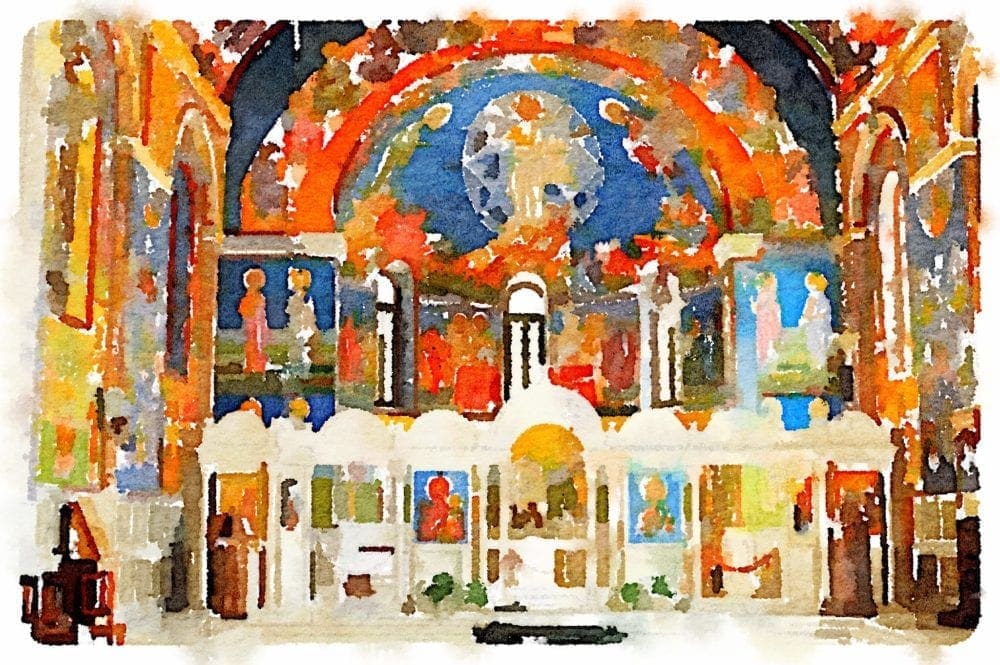
Our first stop and main in Bosnia is Trebinje, a small town with roots going back to Ottoman times and further. It's the southern most town in Bosnia. Trebinje lies on the banks of the Trebišnjica river, in the region of East Herzegovina. The city's old town quarter dates to the eighteenth-century Ottoman period. The town (surprise, surprise) ‘boasts numerous interesting churches and monasteries’. The Cathedral Temple of Holy Transfiguration of Our Lord is scenically tucked away, in the centre of the city park. Even though we’ve seen so many, on this trip, it is worth a visit, for the quality of the interior illumination (see above). The frescoes seem to have been fairly recently updated. Nikola Tesla is amongst the faces commemorated.
There’s also a market square, chock full of honey and cheese, and a famous wooden Ottoman bridge, the Arslanagić Bridge, also known as Perovića Bridge.


Trebinje is described, in tourist brochures as The City of Sun and Plane Trees. That's because it has 260+ annual days of Mediterranean sunshine and the century-old plane trees canopy its iconic town square. It's the warmest city in Bosnia and Herzegovina. Travel writers even extend to using the phrase 'Bosnia's Tuscany' extolling the region's sprawling vineyards, rolling hills, and renowned winemaking heritage. I've also heard 'Eldorado of Archaeology', but I'm not even going to go there.


Giant Waterwheels
The Trebinje area is also notable for its huge waterwheels, (locally known as 'dolapi'), spanning the Trebišnjica River. They were introduced during the Ottoman period - many date back to the eighteenth and nineteenth centuries. These giant wooden wheels were designed to solve a classic karst geography problem: getting water from a deeply recessed river up to dry, elevated agricultural fields. The Trebišnjica, is one of the longest sinking rivers in the world (flowing both overground and through extensive subterranean limestone channels).
The natural, powerful current of the Trebišnjica River pushes the wheel paddles, rotating the structure. Small leather or wooden buckets attached to the rim scoop up water at the bottom and dump it into elevated wooden troughs at the peak of the rotation, feeding network channels.They are built across

Then it's over the border, to The Federation of Bosnia and Herzegovina

